
logo
A powerful architecture & Construction theme. Construct your website in the perfect Ratio.
Alienum phaedrum torquatos nec eu, vis detraxit periculis ex, nihil expetendis in mei. Mei an pericula
Title Image

FAQ

What is Karystos Stone?

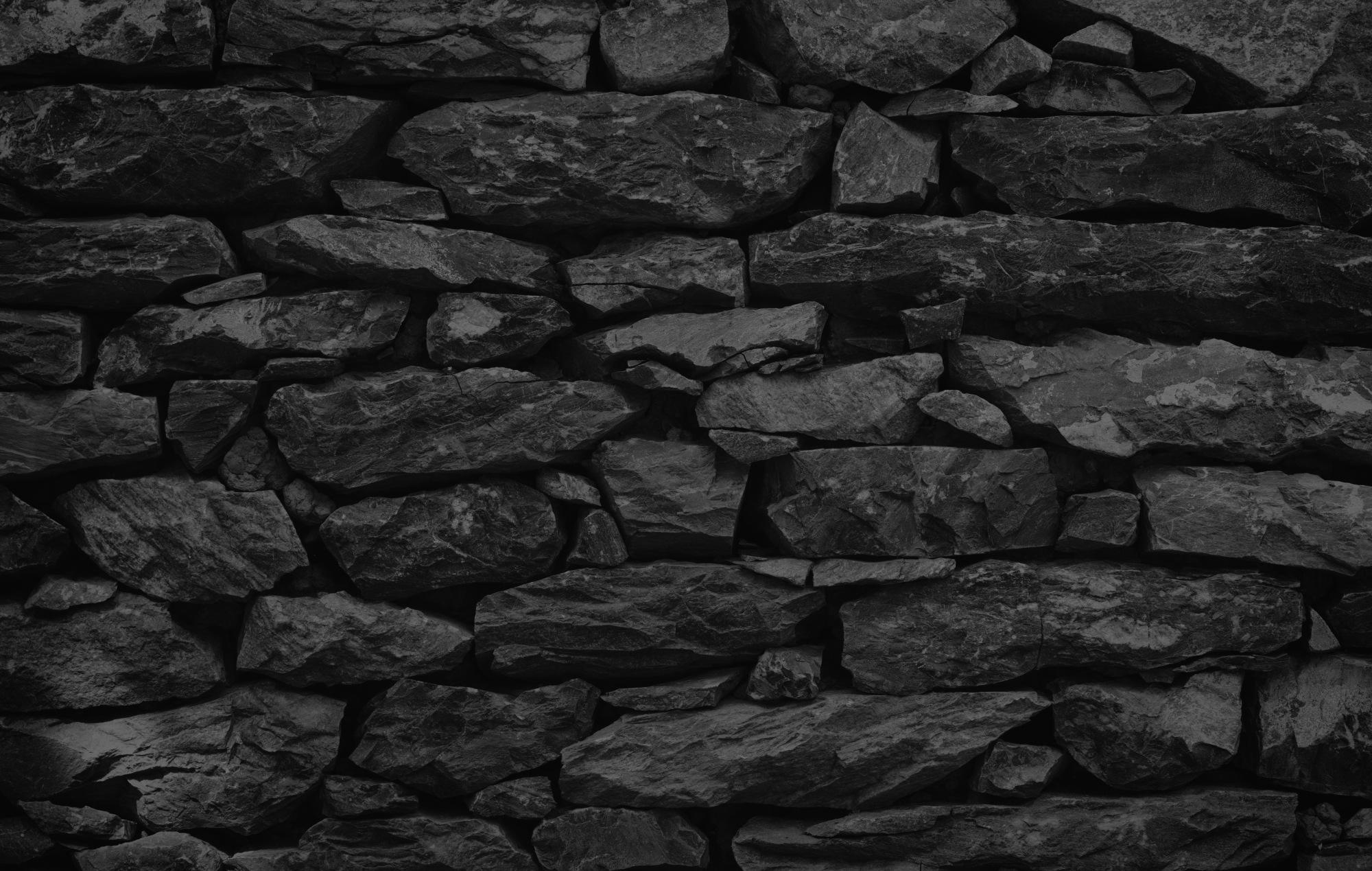
Karystos stone is a natural rock that belongs to the category of slates. It has a designation of origin, is a 100% ecological material created by nature and is mined only in Karystia of South Evia for almost 60 years! It can be used in all building activities and will never go out of fashion. It is ideal for humid environments and high temperatures, it is one of the most elegant solutions for construction and decoration. Irregular slabs and tiles of various free dimensions are available on the market in two thickness categories, mostly the thickness for the normal category is 1.6 cm, and for heavy-duty applications it is available with a thickness of 3.6 cm.

What is the history of the natural stones of Karystos?

Karystos was associated with marble mining which was known as Karystia Lithos (Marmor Karystium & Cipollino) from the 6th century BC. Intensive mining took place mainly in the Roman era. While here are also the famous Dragon Houses where, according to tradition, the name was given to them due to the perfection of their construction and their enormous size, which have been built without foundations from blocks that have been cut and fitted together harmoniously without using any kind of connecting material that to unite their giant slabs.

The “Karystia Stone” has been identified with masterpieces of architecture that continue to attract worldwide admiration to this day, for example: In the Church of Hagia Sophia and the Holy Apostles in Constantinople, in Hadrian’s Library in Athens , in the Basilica of St. Peter, in the markets of Augustus and Trajan in Rome, in the Conservatory of Domitian, in the Amphitheater of the Flavians, in the churches of Omonoia-Faustina and Antoninus, in the mansion of Mamoura, in the palace of Julius Caesar, in the castle Castello Rosso , to Agios Demetrius in Thessaloniki, to Agios Apollinarios in Ravenna, to Agios Marcos in Venice , St. Peter’s in Rome, in the Monastery of St. Luke in Boeotia, in the ceremonial hall of the Aristotle University of Thessaloniki, in the New York public library, in Herodion, etc.

How is Karystos stone extracted and processed?

Mining is the most important task in a quarry. After the locations for the creation of mining fronts have been identified and the necessary access roads have been opened, we begin the landscaping works. Then we complete the work with the final configuration of the mining fronts in tiers. For the selection of the most suitable mining methods, various parameters are taken into account, such as the existence of natural cracks, the hardness and perforation of the deposit. Then the appropriate equipment is transferred to the point and work begins on the detachment and cutting of the raw blocks.

This is followed by moving the volumes to the initial processing site and removing the sterile materials from them and from the mining fronts so that we can descend to the lower altitudes. The second phase of processing is a key stage of the whole process for forming the rock. It includes the tearing of the stone into smaller slabs, and the initial sorting. The third phase includes final processing, quality sorting of rocks, packaging and quality and packaging controls.

Where can I use Karystos Stone?

Karystos Stone is compatible with nature and can be safely used both indoors and outdoors. It gives unparalleled aesthetics, warmth, a unique result each time that gives style, finesse and personality to each space, giving special results that are perfectly in line with modern architectural proposals. It is installed in all areas, such as courtyards, pedestrian streets, squares, kitchen, bathroom, floors, fireplace, bedroom, living room, wall coverings, stairs, swimming pool, barbecue, chimneys, wall constructions, etc.

Why choose natural Karystos Slate Stone?

Karystos natural stone is consistently popular because it is a fairly economical, very durable and non-slip material. It does not contain substances harmful to health, is non-combustible, excellent conductor of heat, Ideal for humid environments and high temperatures. It will give your space elegance, a sense of intimacy, unparalleled aesthetics, extra value, excellent insulation, resistance to time and climatic conditions. It is the ultimate ecological product that time makes it more beautiful since it deteriorates very little with time, while with simple maintenance and frequent cleaning it remains beautiful like the first day! Karystos natural slates and elbows satisfy a wide range of options and aesthetic requirements, while maintaining high quality, low price, durability and functionality.

How is the price of Karystos Natural Stone formed?

The price is formed depending on the veins, the colors, the texture, the size of the rock, and its mineralogical composition. Hard and monochrome rocks are usually more economical than those that have tolerances and patterns (rosettes-waters). For a smoother understanding of prices it is more correct to compare rocks with the same characteristics. The formation of the charges in the market is based on the square meter and the current meter per case. In “KARYSTOLITHOS” you can compare and choose the type that suits you best.

What do I need to know before I decide?

Karystos natural slate has been selling in the market for almost 60 years! It is immortal, while meeting both legal requirements and European construction regulations. It is a natural product and that is why it is not uniform, its designs and shades may vary from batch to batch even if they come from the same place of the same quarry. For more safety, it is advisable to order a few additional pieces from the same batch, on the one hand to complete the installation with uniformity and avoid any variations in the shade of the stone, and on the other hand for the possible replacement of a piece due to a construction error in the installation, or destruction.

What is KARYSTOLITHOS?

 KARYSTOLITHOS is a Greek family company that for more than 40 years has been firmly next to the Greek consumer, individual and professional. It was founded in 1979 by Georgios Kekis and is now one of the most important companies in the industry, maintaining 2 active quarries that produce natural slates and Karystos elbow. Over a period of more than forty years, guided by consistency, hard work and responsibility, we have created a team of people capable of dealing with everything from the simplest constructions to the most complex projects. KARYSTOLITHOS produces a variety of natural stones of Karystos in every size and shape. Our products have quality and packaging certificates in accordance with Greek and international standards and are accompanied by CE marking, which makes them suitable for any use.

Why choose us?
  • For the variety of natural stones of Karystos. With 2 active quarries we can say with confidence that such a variety will hardly be found for stable supply to the market.
  • For our consistency, when you buy from us a palette of e.g. green color, it is green from the beginning to the end, without finding other materials or colors inside.
  • For our know-how. With over 40 years of experience in our field, let us say that Karystos natural stone is our second nature!
  • For the stable efficiency of our production.
  • For responsibility in delivery. Our proven cooperation with all means of transport ensures economic benefit for the customer and guarantees speed and safety.
  • For the continuous quality controls we make at all stages of production.
  • For the selective and specialized processing of our natural stones.
  • For our passion for natural stones and our love for nature with the continuous effort to restore the environment
How do I fix a broken piece of stone:

If any piece of Karystos slate needs to be changed, this is very easy since we follow the method, “one take out-one put”, and this is an advantage of Karystos natural stone. A relatively easy task that you can perform even on your own! Remove the broken piece and clean the old substrate thoroughly so that the new mud or tile adhesive sticks better. Then place the new piece, and later in 2-3 days the joint(joint). Creating material for both the substrate and grouting can be done with cement or tile adhesive. In the case of only a few cracks with a small opening in the joint, it is enough to cover with a special durable resin in the cracks opened.

How can I clean the natural slate stones of Karystos?

Stain removal is not a complex process but requires different cleaning agents depending on the stain. Each stain needs its own way to be removed. Common detergents without a pronounced alkaline pH (green soap + lukewarm water) are suitable for simple stains, in cases when stains on rocks are not cleaned with common detergents, there are special chemical cleaners on the market. It is also noted that in some cases the stain removal process is slow and must be repeated until the surface of the rock is completely cleaned. In any case, it is recommended that a test be carried out on a small, not as far as possible visible part of the surface.

Let’s see one by one the most common cases:

  • Olive oil and grease: they should be removed as soon as possible, otherwise they become particularly durable, so directly we use absorbent paper, or talcum powder, or bran. Such stains are also removed with special commercial alkaline solutions, such as aqueous ammonia solution, solutions of soda ash, sodium hypochlorite along with chalk. Other clever tips for cleaning are the use of a small flame with an LPG vial where you burn the surface with the organic remnants of the oil, and with a short wash with lukewarm water they disappear.
  • Rust: Use hydrogen peroxide on enough white paper towels and place on the stain. Cover the area with transparent film and “seal” it for almost 12 hours. After the end of the hours, mop with lukewarm water. Also lemon and baking soda are good solutions. Place the lemon on the spot for 5 minutes. Do not get carried away and leave it for longer. Then rub with a soft sponge and wash thoroughly. Repeat if necessary. The same process with baking soda with the only difference that you will mix it with water to make a paste, you will let the mixture act for about 15 minutes and you will rub.
  • Paint: Obviously the best solution is to clean the drips while they are still wet, direct cleaning with solvent or ammonia on a damp cloth will provide better cleaning in a shorter time. If we do it later I will need a thinner and rubbing with a spatula.
  • Salts: Rub the surface with a rough synthetic sponge soaked in neutral cleaner. A solution is also offered by a cloth moistened with diluted vinegar or a market detergent special for descaling.
  • Blood: Cleaning the surface with water and with a 50% aqueous ammonia solution that is left to act for a few minutes.
  • Carbonated drinks: Cleaning the surface with clean water and neutral cleaner
  • Alcoholic beverages: To remove such stains and White spirit patches can be used.

Πλάκα Καρύστου

Επισκόπηση απορρήτου

Αυτός ο ιστότοπος χρησιμοποιεί cookies για να σας παρέχουμε την καλύτερη δυνατή εμπειρία χρήστη. Οι πληροφορίες των cookies αποθηκεύονται στο πρόγραμμα περιήγησής σας και εκτελούν λειτουργίες όπως η αναγνώρισή σας όταν επιστρέφετε στον ιστότοπό μας και βοηθώντας την ομάδα μας να καταλάβει ποια τμήματα του ιστότοπου μας θεωρείτε πιο ενδιαφέροντα και χρήσιμα.